Traditional knowledge of Anacardium Occidentale (Linné) -based agrosystems in central Benin: Diversity, agronomic and environmental performance
Authors
Videdji Naesse ADJAHOSSOU, Dossou GBEMAVO, Todegnon HOUNDAGNON, Judicael LALY, Alexandre DANSIFiles
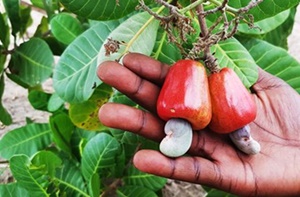
Key Information
Journal
Published in Vol. 9 No. 1 (2021) of Moroccan Journal of Agricultural and Veterinary Sciences.
Multidisciplinary journal that publishes original research articles and literature reviews in the fields of agriculture, agronomy, rural engineering, topography, forestry, horticulture, food, nutrition, animal husbandry and veterinary science (online-ISSN: 2550-4401, print-ISSN: 2028-991X). Indexed by DOAJ, Google Scholar, Articles DOAJ, Mirabelle, ROAD, WorldCat
About the Journal
Abstract
The lack of arable land in central Benin has led farmers to combine food crops with cashew trees. This agro-forestry practice allows producers to diversify their sources of income and food while safeguarding natural resources and respect for the environment. The present study was carried out in central Benin in the communes of Dassa-Zoumé, Glazoué and Bantè, where data from 88 producers were processed and analyzed. The objective of this research is to determine the agro-environmental performance of each of the cashew nut-based agro-forestry systems practiced in central Benin. After an inventory, 14 cashew nut-based agro-forestry systems were identified in the area. Among them, eight (08) agro-systems were of interest for this study. The most performing at the agro-environmental level, based on the farmers' perception of their yields, were first the cashew nut-yam system followed by the cashew nut-cassava system and the cashew nut-cotton system that best guarantee financial security, nutritional quality and respect for the environment. Moreover, cassava cultivation was frequently mentioned by producers as a favourable crop for the development of cashew tree plants.
Keywords: Agroforestry systems, Cashew tree, Annual cropping, Agro-environmental performance, Center Benin
References
Details
License

Revue Marocaine des Sciences Agronomiques et Vétérinaires est mis à disposition selon les termes de la licence Creative Commons Attribution - Pas d’Utilisation Commerciale - Partage dans les Mêmes Conditions 4.0 International.
Fondé(e) sur une œuvre à www.agrimaroc.org.
Les autorisations au-delà du champ de cette licence peuvent être obtenues à www.agrimaroc.org.