Infestation degree of weed communities in sorghum (Sorghum bicolor) crop in Upper Casamance, Senegal
Authors
Samba Laha KA, Mokho SARR, Moustapha GUEYE, Mame Samba MBAYE, Kandioura NOBA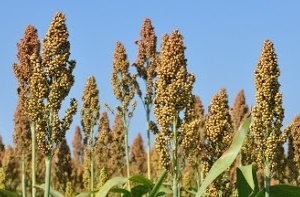
Key Information
Journal
Published in Vol. 8 No. 3 (2020) of Moroccan Journal of Agricultural and Veterinary Sciences.
Multidisciplinary journal that publishes original research articles and literature reviews in the fields of agriculture, agronomy, rural engineering, topography, forestry, horticulture, food, nutrition, animal husbandry and veterinary science (online-ISSN: 2550-4401, print-ISSN: 2028-991X). Indexed by DOAJ, Google Scholar, Articles DOAJ, Mirabelle, ROAD, WorldCat
About the Journal
Abstract
Weed flora of grain sorghum in Upper Casamance was characterized using phyto-sociological surveys from 2015 to 2017 crop years. We analyzed the agronomic importance of these species based on the degree of infestation and the partial nuisibility index (PNI). The present study revealed that 232 plant species were growing as weeds in sorghum fields in Southern Senegal and belong to 138 genera in 43 families. Infestation diagram based on weeds abundance and frequency showed six groups of species reflecting their degree of infestation. The classification of weeds according to their partial nuisibility index revealed that 49 species were potentially harmful against grain sorghum. These species are divided into three groups: 38 species with PNI less than 500, 7 species with PNI between 500 and 1000 and 4 species with an PNI over 1000. The assessment of these two parameters showed a pool of 15 species which constitute a major constraint in sorghum fields. Indeed, knowing these target species is essential before elaboration of any integrated weed management (IWM) strategies for increasing grain sorghum yield under Sudanian conditions of Southern Senegal.
Keywords: Infestation degree, injurious, Senegal, Sorghum, Weed flora
References
Details
License

Revue Marocaine des Sciences Agronomiques et Vétérinaires est mis à disposition selon les termes de la licence Creative Commons Attribution - Pas d’Utilisation Commerciale - Partage dans les Mêmes Conditions 4.0 International.
Fondé(e) sur une œuvre à www.agrimaroc.org.
Les autorisations au-delà du champ de cette licence peuvent être obtenues à www.agrimaroc.org.