Ethno-zoology study and uses forms of Trichechus senegalensis in southern Benin
Authors
Hermann AWO, Sylvestre Abiola CHAFFRA, Francis Biaou YABI, Toussaint Olou LOUGBEGNON, Maximin DJONDO, Brice TENTE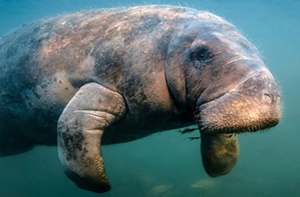
Key Information
Journal
Published in Vol. 8 No. 2 (2020) of Moroccan Journal of Agricultural and Veterinary Sciences.
Multidisciplinary journal that publishes original research articles and literature reviews in the fields of agriculture, agronomy, rural engineering, topography, forestry, horticulture, food, nutrition, animal husbandry and veterinary science (online-ISSN: 2550-4401, print-ISSN: 2028-991X). Indexed by DOAJ, Google Scholar, Articles DOAJ, Mirabelle, ROAD, WorldCat
About the Journal
Abstract
The African manatee (Trichechus senegalensis) is after hippopotamus the largest mammal of the wetlands of southern Benin. To understand the importance of the African manatee, its organs and products for the populations of southern Benin, a survey was conducted among 225 people in eleven (11) localities in six (6) communities. In the study environment, the species use is for food (96.8%), medicinal (83,0 %), cultural (29,8 %) and tourism (13,8%). A total of 25 manatee organs are known in the pharmacopoeia and in the food of the communities of southern Benin. The products are used either alone or in combination with plant or other animal products. Diversity of use is more pronounced in fon and Mina communities. For the pharmacopoeia, the diversity index is very high among the Goun and Wémè with respectively 0.43 and 0.41. The diversity of ethno-zoological knowledge on the manatee, the varied use of its organs and products, the anthropic and natural pressures denote both strengths and weaknesses for the conservation and enhancement of the species in the study environment. For the conservation and sustainable management of the species and its habitats, the study suggests the implementation of a plan of action including the local populations to the conservation of the manatee which will take into account the prohibition of hunting, valorization of the ecotourism potentialities of the region, participatory monitoring of habitats and the creation of a conservation area for all manatee habitats in Africa and other species of importance for biodiversity in southern Benin.
Keywords: Manatee, Trichechus senegalensis, ethno-zoology, conservation, wetlands, ecotourism, Benin
References
Details
License

Revue Marocaine des Sciences Agronomiques et Vétérinaires est mis à disposition selon les termes de la licence Creative Commons Attribution - Pas d’Utilisation Commerciale - Partage dans les Mêmes Conditions 4.0 International.
Fondé(e) sur une œuvre à www.agrimaroc.org.
Les autorisations au-delà du champ de cette licence peuvent être obtenues à www.agrimaroc.org.