Analysis of determinants of cattle farming systems in the communes of Kalalé and Gogounou in Benin
Authors
Mohamed KORA GOUNOU, Jacob Afouda YABI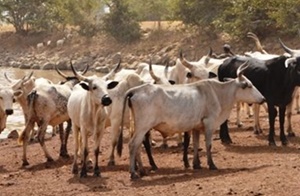
Key Information
Journal
Published in Vol. 8 No. 3 (2020) of Moroccan Journal of Agricultural and Veterinary Sciences.
Multidisciplinary journal that publishes original research articles and literature reviews in the fields of agriculture, agronomy, rural engineering, topography, forestry, horticulture, food, nutrition, animal husbandry and veterinary science (online-ISSN: 2550-4401, print-ISSN: 2028-991X). Indexed by DOAJ, Google Scholar, Articles DOAJ, Mirabelle, ROAD, WorldCat
About the Journal
Abstract
The presence of farmers and their geographical dynamics create dysfunctions in the management of cattle farming systems. The aim of this study is to make a typology of cattle farming systems in the communes of Kalalé and Gogounou in northeastern Benin in order to determine the variables that explain their groupings. It was conducted with 100 farmers to analyze the different practices and objectives pursued by cattle farmers. The Multiple Correspondence Analysis (MCA) method made it possible to highlight the different groups of farming systems in the area according to their cattle farming practices. Then, a logistic analysis made it possible to determine the different variables which influence the groups obtained. It appears that the cattle farming practices of the area are determined by the number of cattle herds, the cattle breeds, the size of the herd, the availability of fodder, the financial performance of the cattle, and the socio-demographic characteristics of the farmers households and the availability of animal health services. This diagnosis made it possible to establish the cattle farming practices in the study area. It can be concluded that the majority of farming systems are traditional, which makes it possible to modernize farming practices to curb the problems of cattle farming systems.
Keywords: Livestock, Cattle, North Benin, logit, ACM
References
Details
License

Revue Marocaine des Sciences Agronomiques et Vétérinaires est mis à disposition selon les termes de la licence Creative Commons Attribution - Pas d’Utilisation Commerciale - Partage dans les Mêmes Conditions 4.0 International.
Fondé(e) sur une œuvre à www.agrimaroc.org.
Les autorisations au-delà du champ de cette licence peuvent être obtenues à www.agrimaroc.org.