Effect of salt stress on the foliage system of a food legume (Phaseolus vulgaris L.) grown in bentonite soil
Authors
Mostefa KOUADRIA, Mira SEHARI, Abdelkrim HASSANI, Fatiha KOULALI, Soumia ZOUABLIA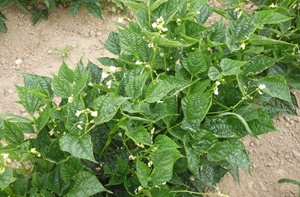
Key Information
Journal
Published in Vol. 8 No. 1 (2020) of Moroccan Journal of Agricultural and Veterinary Sciences.
Multidisciplinary journal that publishes original research articles and literature reviews in the fields of agriculture, agronomy, rural engineering, topography, forestry, horticulture, food, nutrition, animal husbandry and veterinary science (online-ISSN: 2550-4401, print-ISSN: 2028-991X). Indexed by DOAJ, Google Scholar, Articles DOAJ, Mirabelle, ROAD, WorldCat
About the Journal
Abstract
The purpose of this research is to characterize the effect of salt stress on two varieties of Phaseolus vulgaris L. which is a salinity sensitive plant. To study the response of the two varieties to salt stress, we analyzed some of the plant’s morphological and biochemical parameters to identify the stress indicators, tolerance strategies, and highlight adaptation criteria as well as the genotype that could be grown under salinity without significantly decreasing yield. For this purpose, the two varieties were (“coco rose” and “djedida”) were subjected to salt stress of 6 g/l or approximately 100 mM of NaCl supplemented with “bentonite” clay at 2 different rates (3.5 and 7%) until the fruiting stage, compared to the control without salt or “bentonite”. According to the results, the two studied varieties have different reactions to salt stress. The biomass of the aerial part of the “pink coco” variety is greater than that of the variety “djedida”, especially in the presence of NaCl. On the other hand, the strategy of the bean variety “pink coco” was to accumulate more soluble sugars in leaves as well as reducing leaf area and decreasing the number of fruits. On the other hand, there was a larger accumulation of soluble sugars and proline in leaves of the variety “djedida” as well as reduced leaves, a less developed root system and zero number of fruits which show high sensitivity to excess salt for this variety. Finally, addition of “bentonite” reduced the harmful effect of salinity in the plant.
Keywords: Variety, Phaseolus vulgaris, salinity, bentonite, proline, sugars, adaptation.
References
Details
License

Revue Marocaine des Sciences Agronomiques et Vétérinaires est mis à disposition selon les termes de la licence Creative Commons Attribution - Pas d’Utilisation Commerciale - Partage dans les Mêmes Conditions 4.0 International.
Fondé(e) sur une œuvre à www.agrimaroc.org.
Les autorisations au-delà du champ de cette licence peuvent être obtenues à www.agrimaroc.org.