Fresh and frozen fish distribution in Abidjan: Hygiene and microbiological evaluation
Authors
Yiwo Thecle Noée Veline N'GUESSAM, Patrice Désiré Yapi Assoi YAPI, Thierry Yapo MONNET, Chantal Lêniféré SORO, Louise Atchibri ANIN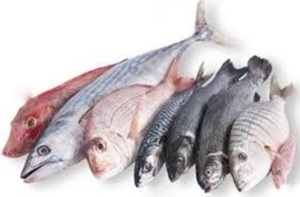
Key Information
Journal
Published in Vol. 6 No. 1 (2018) of Moroccan Journal of Agricultural and Veterinary Sciences.
Multidisciplinary journal that publishes original research articles and literature reviews in the fields of agriculture, agronomy, rural engineering, topography, forestry, horticulture, food, nutrition, animal husbandry and veterinary science (online-ISSN: 2550-4401, print-ISSN: 2028-991X). Indexed by DOAJ, Google Scholar, Articles DOAJ, Mirabelle, ROAD, WorldCat
About the Journal
Abstract
Fish is one of the main sources of animal protein commercialized fresh or processed in Côte d’Ivoire. Health problems and even nutritional risks were noticed in spite of the existence of self-control systems and official controls in place. The objective of this study is to determine the causes of the sanitary insecurity and to evaluate the microbiological quality of the fish sold in the distribution channels of Abidjan. The Ishikawa method was used to identify the causes of health insecurity. The results of the microbiological analyzes carried out on frozen fish (Trachurus trachurus, Scombers combrus) and fresh (Chrysichthys nigrodigitafus) show that the coliform count is high (7.1 102 and 8.1 101) in fresh fish. However, Staphylococcus aureusis was below 10 CFU/g of product. Salmonella spp was absent in all the samples under the investigation. Labor remains the major source of germs and the most important “weakest link”. Appropriate corrective action will reduce the sanitary insecurity of fishsold in the distribution system by around 90 %.
Keywords: Fish, Ishikawa diagram, circuit of distribution, contamination, health insecurity.
References
Details
License

Revue Marocaine des Sciences Agronomiques et Vétérinaires est mis à disposition selon les termes de la licence Creative Commons Attribution - Pas d’Utilisation Commerciale - Partage dans les Mêmes Conditions 4.0 International.
Fondé(e) sur une œuvre à www.agrimaroc.org.
Les autorisations au-delà du champ de cette licence peuvent être obtenues à www.agrimaroc.org.