Neonatal diarrhea in veal in Morocco: prevalence of major infectious causes (Escherichia coli F5, Coronavirus, Rotavirus and Cryptosporidium parvum)
Authors
Zaid ZOUAGUI, Sara ELBAY, Said ALALI, Hicham AIT LBACHA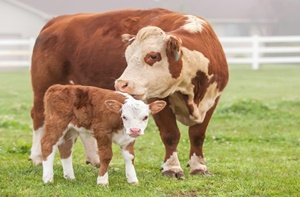
Key Information
Journal
Published in Vol. 5 No. 2 (2017) of Moroccan Journal of Agricultural and Veterinary Sciences.
Multidisciplinary journal that publishes original research articles and literature reviews in the fields of agriculture, agronomy, rural engineering, topography, forestry, horticulture, food, nutrition, animal husbandry and veterinary science (online-ISSN: 2550-4401, print-ISSN: 2028-991X). Indexed by DOAJ, Google Scholar, Articles DOAJ, Mirabelle, ROAD, WorldCat
About the Journal
Abstract
Neonatal diarrhoea in calves is a worldwide problem with considerable economic impact. The objective of this study is to provide updated prevalence estimates and epidemiological information for the major aetiological agents of enteritis in calves, namely Escherichia coli F5, Coronavirus, Rotavirus and Cryptosporidium parvum in Morocco. The field immuno-chromatography test «Tetra-Kit BioX K156» was used to screen faecal samples for the above mentioned pathogens from 1932 calves from 78 farms distributed across four cattle breedingregions of Morocco. Overall, 196 calves (10 %), between 1 and 60 days old, were found to experience diarrhoea. Individual prevalence of diarrhoeic calves in farms that undertake vaccination was found to be equivalent to those that do not vaccinate against Escherichia coli, Coronavirus et Rotavirus. Significant differences in prevalence of the aetiological agents of interest are however noted between farms that vaccinate and those that do not. Thus, Cryptosporidiosis prevalence is found to be higher in vaccinated herds. Neonatal diarrhoea in calves remains a major problem at the national level and control programs should be implemented in order to decrease its economic losses.
Keywords: Bovine neonatal diarrhoea, Escherichia coli, Coronavirus, Rotavirus, Cryptosporidium parvum, Morocco
References
Details
License

Revue Marocaine des Sciences Agronomiques et Vétérinaires est mis à disposition selon les termes de la licence Creative Commons Attribution - Pas d’Utilisation Commerciale - Partage dans les Mêmes Conditions 4.0 International.
Fondé(e) sur une œuvre à www.agrimaroc.org.
Les autorisations au-delà du champ de cette licence peuvent être obtenues à www.agrimaroc.org.