Analytical study of somatic cell counts of milk in cattle breeding above ground in semi-arid coastal Tunisia
Authors
Youssef M'SADAK, Rim HAJ MBAREK, Leila MIGHRI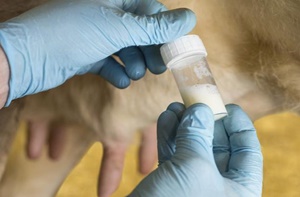
Key Information
Journal
Published in Vol. 5 No. 2 (2017) of Moroccan Journal of Agricultural and Veterinary Sciences.
Multidisciplinary journal that publishes original research articles and literature reviews in the fields of agriculture, agronomy, rural engineering, topography, forestry, horticulture, food, nutrition, animal husbandry and veterinary science (online-ISSN: 2550-4401, print-ISSN: 2028-991X). Indexed by DOAJ, Google Scholar, Articles DOAJ, Mirabelle, ROAD, WorldCat
About the Journal
Abstract
The objective of this work is to analyze individual cell counts (ICC) for a complete cow lactation and identify risk factors for mastitis. The study was conducted on a sample of 113 cattle farms on three areas of the semi-arid coastal Tunisia: Sousse, Monastir and Mahdia. The majority of the examined sample flocks had high ICC. The analysis of the ICC in relation to husbandry and milking conditions in three regions helped highlight some factors that significantly affects ICC and the likelihood of the spread of mastitis. For the region of Sousse, the use of a litter reduced to half the ICC that were proven to be highly related to the cleanliness of both the sleeping area and the udder. The milking parameters “udder depth”, “udder cleanliness” and “No teat disinfection” have been shown to affect the ICC and are regarded as causal factors of bovine mastitis. In the region of Monastir, factors that significantly increased ICC (P <0.05) were: free stalling, cleaning milking machine with only water, the poor condition of the pipes, non removal of the first streams of milk and poor cleanliness of the udder and the legs of the cows. For the region of Mahdia, the statistical study revealed that the lack of cleaning and wiping of the udder was associated with high ICC. Regarding the operating parameters of the milking machine, the Pulse Frequency (PF) and the Pulse Report (PR) had a significant influence on the rise of the ICC.
Keywords: Dairy husbandry, milking conditions, individual cell counts, mastitis, risk factors, semiarid Tunisia.
References
Details
License

Revue Marocaine des Sciences Agronomiques et Vétérinaires est mis à disposition selon les termes de la licence Creative Commons Attribution - Pas d’Utilisation Commerciale - Partage dans les Mêmes Conditions 4.0 International.
Fondé(e) sur une œuvre à www.agrimaroc.org.
Les autorisations au-delà du champ de cette licence peuvent être obtenues à www.agrimaroc.org.