Contribution to the study of the antibacterial activity of natural honey of Moroccan origin
Authors
Omar BELHAJ, Ichrak EL ABBADI, Tarik OUCHBANI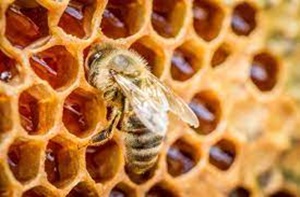
Key Information
Journal
Published in Vol. 4 No. 3 (2016) of Moroccan Journal of Agricultural and Veterinary Sciences.
Multidisciplinary journal that publishes original research articles and literature reviews in the fields of agriculture, agronomy, rural engineering, topography, forestry, horticulture, food, nutrition, animal husbandry and veterinary science (online-ISSN: 2550-4401, print-ISSN: 2028-991X). Indexed by DOAJ, Google Scholar, Articles DOAJ, Mirabelle, ROAD, WorldCat
About the Journal
Abstract
Eight samples of natural Moroccan honeys were tested for their antimicrobial effect, at the concentrations of 100, 75, 50 and 25 %, on three bacterial strains, Escherichia coli, Staphylococcus aureus and Salmonella spp. The Agar diffusion method showed that the concentrations tested of orange honey, oregano honey, multiple flowers honey and spurge honey, have inhibited S. aureus growth, except the orange honey which expressed practically no inhibition at the concentration of 25 %. With this concentration, the carob honey have shown a low inhibition activity on E. coli growth. However, Eucalyptus, Asparagus, Carob and Tadla flowers honeys showed no inhibition effect on E.coli. All honeys have demonstrated a prominent antibacterial effect on Salmonella and E. coli at the tested concentrations. The liquid-medium tests reveal that the various honeys affect unequally the three strains growth. In most cases, the inhibitory potency was very pronounced (98 % Inhibition) at the concentration of 100 % and 75 %. The S. aureus growth was the least inhibited at the concentration of 25 %. Likewise, most of the honeys showed an E. coli inhibition ranging from 60 to 80 % at the concentration of 50 %. The spurge honey registered the most inhibitory effect on Salmonella at all tested concentrations.
Keywords: Honey, inhibition, bacteria, antimicrobial activity, Escherichia coli, Staphylococcus aureus, Salmonella spp.
References
Details
License

Revue Marocaine des Sciences Agronomiques et Vétérinaires est mis à disposition selon les termes de la licence Creative Commons Attribution - Pas d’Utilisation Commerciale - Partage dans les Mêmes Conditions 4.0 International.
Fondé(e) sur une œuvre à www.agrimaroc.org.
Les autorisations au-delà du champ de cette licence peuvent être obtenues à www.agrimaroc.org.