Comparative analysis of morpho-zootechnical characteristics by age group of Kababich (Sudanese origin) and Balami (Sahelian origin) sheep in Niger
Published 2026-01-30
Keywords
- Array
Copyright (c) 2026 Moroccan Journal of Agricultural and Veterinary Sciences

This work is licensed under a Creative Commons Attribution-NonCommercial-ShareAlike 4.0 International License.
Abstract
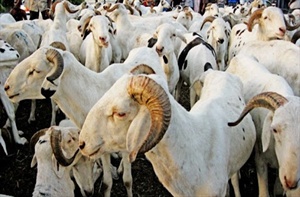
This research examines the morphological and zootechnical differences between Kababich sheep from the Sudanese desert and Balami sheep from the Nigerien Sahel according to age. The objective is to determine their genetic complementarity in order to improve sheep meat production in a sustainable manner in Niger. A total of 22 morphological characteristics were measured in 419 animals, including 217 Kababich sheep and 202 Balami sheep, divided into three age groups (18, 24, and 30 to 36 months). The results show a significant influence of age and breed on most of the traits studied. At 18 and 24 months of age, Balami sheep have superior body measurements, reflecting early growth and high lambing potential. Conversely, Kababich sheep are distinguished by the marked development of caudal traits at the end of growth (30-36 months), reflecting a better ability to adapt to arid environments. This differentiation highlights a strong morpho-functional complementarity, suggesting that controlled Kababich x Balami crossbreeding programs could sustainably improve sheep productivity and the incomes of Nigerien farmers.
Keywords: Kababich sheep, Balami sheep, morphology, sheep productivity, Niger