Policies for cattle production in the Democratic Republic of Congo from 1960 to 2023

Abstract
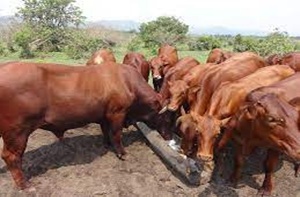
The Democratic Republic of Congo (DRC) has 80 million hectares of arable lands. With good management and exploitation, it can produce at least 100 million cattle compared to 2.4 million currently. The cattle breeds introduced and distributed in the country date from before the colonial period and were intended for meat and work. Over the last five decades, mixing by insemination and importation of breeding stock has been carried out to improve meat and milk production. The zootechnical stations were created for this purpose for the process of selection, mixing and sharecropping. The cattle production strategies of the colonial and post-independence era gave very mixed results. Beef imports are increasing from year to year. Population needs for meat are met by wild meat. The country faces production and efficiency challenges for public production services, particularly in terms of governance, infrastructure support, improvement of the living conditions of players in the sector, support for production, processing, distribution and marketing. The DRC does not have a law on livestock production.
Keywords: Policies, Cattle breeding, Production strategies