A tissue trap technique, an innovative physical method for field monitoring and capture of Noorda blitealis, the main Moringa pest

Abstract
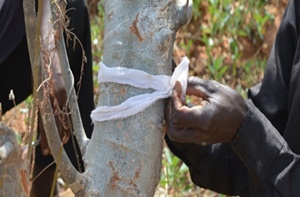
Moringa oleifera Lam occupies has an important place the agricultural systems of semi-arid zones of West Africa and contributes to the nutritional balance of local populations. The moringa defoliator caterpillar, Noorda blitealis Walker is one of the main constraints to its production. This pest can cause total crop failure. To reduce losses, producers use insecticides despite these harmful effects. In Niger, some reports even alert to the use of DDT, a banned pesticide, to control this Moringa pest. To avoid the harmful effects of chemical methods and identify a suitable ecological method, a study on the bioecology of N. blitealis Walker was conducted in the field. A trap method which consists of tying a piece of tissue fabric around the trunk of the Moringa oleifera plants to collect the larvae of the pest as they move across the plant. This study was carried out to determine the height at which this cloth must be placed on the M. oleifera tree for an effective assessment of the density of the larvae of the pest. Thus, three positions were compared leading to a capture frequency of 56.3% of N. blitealis larvae at the base of the trunk, 81.0% at the level of the trunk and 64.6% in the crown. These results can contribute to strengthening monitoring programs for this important pest of M. oleifera, a tree of importance in the Sahel.
Keywords: Tissue trap, Noorda blitealis monitoring, sampling, Moringa oleifera