Real-time monitoring of bread fermentation of various liquid sourdoughs based on soft wheat, durum wholemeal, baobab and millet flours

Abstract
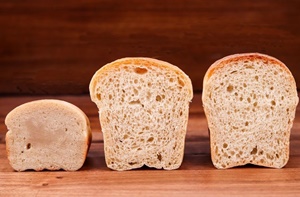
Fermentation with liquid sourdoughs can make a real contribution to the creation of a wide variety of bakery products distinguished by their flavor, texture and health benefits. The aim of the present study was to evaluate the fermentation potential of four liquid sourdoughs prepared in the laboratory, by monitoring the main bread-making parameters in real time, using a device with sensors. The results showed that the average bread-making time varied from 640 to 852 min, with an average specific volume ranging from 2.40 to 3.98 cm3/g, a final Total Titrable Acidity (TTA) ranging from 3.92 to 7.31 ml 0.1N NaOH/10 g and a final pH ranging from 3.31 to 3.89, an average production of CO2 from 0.51 to 1.01 L/kg of dough, while the average production of ethanol released varied from 4.94 to 10.6 L/kg of dough. L9 liquid sourdough prepared with wholewheat showed the best dough fermentation performance. Individual and vertical panigrams were used for visual comparison between these sourdoughs, in order to select the one most suitable for bread-making.
Keywords: sourdough, rheology, bread-making, fermentation, yeast, lactic acid bacteria