Quality of kefir from camel raised in an the extensive system in Tunisia

Abstract
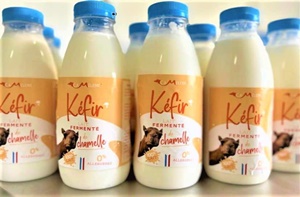
The aim of this study is to transform milk of camel, raised in an extensive system, into kefir. The pasteurization (63°C for 30 min) of the milk, the incubation with three rates of kefir grains (2,5 and 10%) and different incubation times (18; 20 and 24 h) were evaluated during the transformation. The physicochemical characteristics of milk, kefir grains, camel kefirs and the chemical composition of the diet of the camels were measured. The results showed that camel milk is characterized by a neutral pH value (6.9 ± 0.11) and a high dry matter (DM) content of 114.2 ± 0.11g/l. Kefir grains have an acid pH (3.9) and their fat content is very low (0.02 g/kg). The chemical composition of pastoral species showed an NDF content of 33.9 to 81.1% and an ADF content of 22.5% to 61.7%. Varying the rate of kefir grains from 2,5 to 10% had a significant effect on the pH, acidity and viscosity of the kefir obtained for the different incubation times (18, 20 and 24 h). Consequently, camel milk was suitable for transformation into kefir in accordance with legislative standards.
Keywords: Camel milk, kefir grains, pastoral plants and chemical characteristics