Transmission of African animal trypanosomoses (AAT) and trypanosome prevalence in livestock in the Sudanese zone of Côte d'Ivoire

Abstract
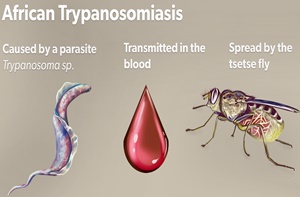
The entomological and parasitological situation of Animal African Trypanosomiasis (AAT) was assessed in the Sudanese zone of Côte d'Ivoire, following the cessation of control activities due to the war that occurred in 2002 in the country. The study is part of the implementation of the emergency project initiated by the FAO to revive this control. The work was carried out in localities from the regions (Korhogo, Ferkessédougou) of the savannah area. To study transmission, entomological parameters (density, physiological ages, infection) were determined by sampling tsetse flies using the Vavoua trap. For the parasitological study, trypanosomian prevalence was assessed from data obtained from samples taken from animals that had been treated with trypanocides for at least three months. The pathogenic trypanosomes were detected on blood smears and characterized by PCR. In the Sudanese zone of Côte d'Ivoire, the transmission of AAT is permanent because of the significant presence of Glossina palpalis gambiensis populations and the three main pathogens (Trypanosoma vivax, Trypanosoma congolense, Trypanosoma brucei) circulating there. Thus, trypanosomiasis prevalence remains high despite the control activities (vector control, trypanocide treatments) carried out in livestock.
Keywords: AAT, Transmission, Prevalence, Sudanese zone, Côte d’Ivoire