Floristic diversity and socio-economic value of fruit and vegetables sold in the municipality of Uíge, Angola
Keywords:
Inventaire, fruits, légumes-feuilles, Valeur socio-économique, UígeAbstract
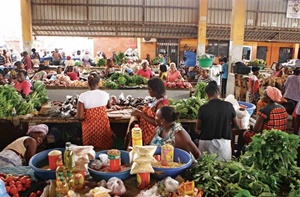
This study is the first attempt to document the fruit and leafy vegetables sold in the municipality of Uíge, Angola. The field survey was conducted between April 2019 and September 2021. Data collection was carried out using an interview based on a semi-structured questionnaire followed by direct observation in the field. A total of 247 fruit and vegetable vendors were interviewed, of which 95% were women and only 4.9% were men. The ethnobotanical inventory identified a total of 75 species of fruit and leafy vegetables in 48 genera and 36 botanical families. The best-represented families are Brassicaceae (8 species), Myrtaceae (5 species), Rutaceae (5 species), and Apocynaceae (5 species). Fruits were more abundant (64.5%) than leaves (34.2%). The fruits and leafy vegetables (62.2%) documented were of exotic origin, while 37.8% were indigenous. Most (89%) of the money received from the sale of fruits and leafy vegetables was used to purchase goods, and services, including food, and clothing. Scientific investigations related to this theme were suggested to be carried out throughout the country to better document all the different fruits and leafy vegetables produced at the national level and establish economic policies allowing their export in order to contribute to economic diversification. Finally, economic studies should be carried out to evaluate the quantities produced and harvested per year, and phytochemical and nutritional analyses are to be carried out on all fruits harvested, and grown in Angola in order to establish the food table of these locally produced foods.
Keywords: Inventory, fruits, Leafy vegetables, socio-economic value, Uíge
Downloads
Downloads
Published
Issue
Section
License

Revue Marocaine des Sciences Agronomiques et Vétérinaires est mis à disposition selon les termes de la licence Creative Commons Attribution - Pas d’Utilisation Commerciale - Partage dans les Mêmes Conditions 4.0 International.
Fondé(e) sur une œuvre à www.agrimaroc.org.
Les autorisations au-delà du champ de cette licence peuvent être obtenues à www.agrimaroc.org.