Risk of potential transmission of bacterial infections by synanthropic flies in urban areas of Côte d'Ivoire
Abstract
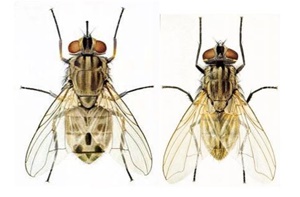
From 11 January to 25 February 2022, flies were caught in the city of Korhogo, in the Sudanese area of Côte d'Ivoire. The aim was to assess the potential role of these flies in the transmission of bacterial infections to humans and animals in urban areas. Catches were made using a sanitized food bait trap in four types of ecosystems (restaurants, school canteens, markets, slaughterhouses, livestock areas). Two species of synanthropic flies were captured and identified : Musca domestica and Chrysomya albiceps. They were used to characterize 7 species of bacteria in the laboratory : Escherichia coli, Salmonella sp., Proteus sp., Klebsiella sp., Staphylococcus sp., Bacillus sp. and Pseudomonas sp. The result is that the risk of bacterial contamination in the town of Korhogo is high, especially in livestock areas and restaurants. The risk is just as great, but to a lesser extent and in comparable proportions, in markets and slaughterhouses. In school canteens, the risk appears to be the lowest. However, children are still in danger because the proportions of synanthropic flies and pathogenic bacteria that circulate there remain significant.
Keywords: Synanthropic flies, Bacteria, Urban area, Côte d’Ivoire
Downloads
Downloads
Published
Issue
Section
License

Revue Marocaine des Sciences Agronomiques et Vétérinaires est mis à disposition selon les termes de la licence Creative Commons Attribution - Pas d’Utilisation Commerciale - Partage dans les Mêmes Conditions 4.0 International.
Fondé(e) sur une œuvre à www.agrimaroc.org.
Les autorisations au-delà du champ de cette licence peuvent être obtenues à www.agrimaroc.org.