Environmental impacts of an improved fish farming system: Compensatory hyperphagia of fish in the whédos of the Ouémé delta in southern Benin
Abstract
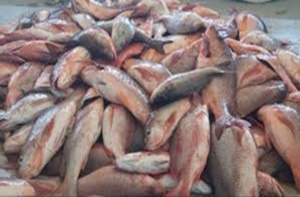
In the current context of climate change and widespread environmental pollution, assessing the sustainability of production systems is essential. Thus, the environmental impacts of the production of Clarias gariepinus and Oreochromis niloticus in the whedos of the Ouémé delta in Benin were assessed using Life Cycle Assessment (LCA). Estimation of nitrogen (N) and phosphorus (P) releases in production systems (whedos), (T0: fish normally fed 3 times a day, T1: 12H fasting, T2: 24H fasting and T3: 48H fasting) was carried out according to the nutritional balance method, and the impact categories were calculated using the CML2 Baseline 2000 method using the SimaPro® environmental analysis tool®. It appears that, regardless of the environmental impact category considered, the T2 system obtained the lowest impact values ??in C. gariepinus compared to T0, T1 and T3. In O. niloticus, except for the impacts of climate change and non-renewable energy which are lower in T2, the others are lower in T3. Food production remains the major contributor of impact categories apart from eutrophication dominated by the production process.
Keywords: Life Cycle Assessment, happa, Ouémé Valley, Clarias gariepinus, Oreochromis niloticus
Downloads
Downloads
Published
Issue
Section
License

Revue Marocaine des Sciences Agronomiques et Vétérinaires est mis à disposition selon les termes de la licence Creative Commons Attribution - Pas d’Utilisation Commerciale - Partage dans les Mêmes Conditions 4.0 International.
Fondé(e) sur une œuvre à www.agrimaroc.org.
Les autorisations au-delà du champ de cette licence peuvent être obtenues à www.agrimaroc.org.