Comparison of different adjustment models of the growth curve of Barbarin lambs under two bioclimatic zones in Tunisia
Abstract
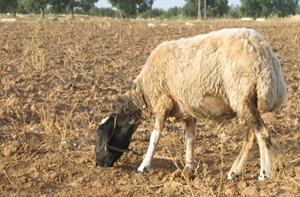
The objective of this study is to analyze the growth performance of the Barbarine sheep breed with its two main ecotypes (Red-headed Barbarine and Black-headed Barbarine) under two different bioclimatic zones (arid and semi-arid) as well as to adjust the growth curve of this breed. Growth monitoring data from twenty flocks of Barbarine sheep were used, collected over 4 years on 12 919 lambs weighed regularly at 21-day intervals. The weights at the standard ages as well as Averge Daily Gains (ADG) 10-30, 30-50, 50-70 and 70-90 of the Red-headed Barbarine are higher than that of the Black-headed Barbarine. The average weights at typical ages of the Red-headed Barbarine were 5.33 Kg, 8.50 Kg, 11.5 Kg, 15.2 Kg and 17.7 Kg respectively at 10, 30, 50, 70 and 90 days. Those of the ADG were 160.3 g, 163.4 g, 219.2 g and 157.5 g respectively for the ADG10-30, ADG 30-50, ADG 30-70 and ADG 30-90. Similarly, the growth performances recorded under the arid bioclimatic zone were higher than those of the semi-arid zone. The adjustment of the growth curves was carried out according to four nonlinear mathematical models (Brody, Logistics, Gompertz and Von Bertalanffy). These models were evaluated based on the coefficient of determination (R²) and the sum of squares of residual deviations (SCER). The results indicated that the Logistic model, having the highest R² values ??and the lowest SCERs, showed the best fit for Barbarin lamb growth while Brody's model gave the lowest R² values ??and the highest SCERs. The Logistic function parameters (A, B and C) were respectively 17.9, 4.08 and 0.0381 for the black-headed barbarine and 18.8, 4.00 and 0.0406 for the Red-headed Barbarine. These parameters varied with the interaction ecotype – bioclimatic zone, the farm, the interaction herd – year of lambing, the age of the mother, the interaction sex – mode of birth and the month of birth.
Keywords: growth curve, nonlinear model, Barbary breeds
Downloads
Downloads
Published
Issue
Section
License

Revue Marocaine des Sciences Agronomiques et Vétérinaires est mis à disposition selon les termes de la licence Creative Commons Attribution - Pas d’Utilisation Commerciale - Partage dans les Mêmes Conditions 4.0 International.
Fondé(e) sur une œuvre à www.agrimaroc.org.
Les autorisations au-delà du champ de cette licence peuvent être obtenues à www.agrimaroc.org.