Growth and nutrient content of juvenile Clarias gariepinus reared in an environment contaminated with the insecticides Emamectin benzoate and Acetamiprid
Authors
Prudencio AGBOHESSI, Hugues ELEGBE, Fousséna TAIROU, José GAMAVO, Ibrahim IMOROU TOKO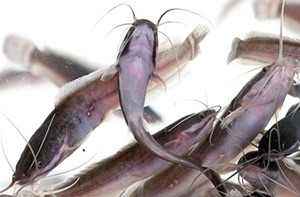
Key Information
Journal
Published in Vol. 9 No. 4 (2021) of Moroccan Journal of Agricultural and Veterinary Sciences.
Multidisciplinary journal that publishes original research articles and literature reviews in the fields of agriculture, agronomy, rural engineering, topography, forestry, horticulture, food, nutrition, animal husbandry and veterinary science (online-ISSN: 2550-4401, print-ISSN: 2028-991X). Indexed by DOAJ, Google Scholar, Articles DOAJ, Mirabelle, ROAD, WorldCat
About the Journal
Abstract
This study aims to evaluate, under controlled conditions, the effects on growth and biochemical composition of an exposure of Clarias gariepinus to the insecticides Emamectin benzoate and Acetamiprid. Juveniles of C. gariepinus (2.38 ± 0.1 g) were subjected to three sub-lethal concentrations of a commercial product containing the two insecticides (0; 0.25 and 0.50 µl/l) for 28 days. Data collected and assays in the laboratory performed on whole fish, were used to determine the survival rate, growth performance, feed efficiency and nutritional parameters. Results of the study showed that while survival rates were similar for all treatments, the growth of exposed fishes was relatively lower than that of the control. This low growth in contaminated fish is related to the decrease in food intake and feed efficiency. This is due to preferential use of body proteins and some carbohydrates to produce energy in order to cope with chemical stress and energy cost of abnormal behaviors (hyperactivity, rapid swimming, loss of balance, etc.) induced by the insecticides.
Keywords: Exposure, insecticide, Clarias gariepinus, growth, biochemical composition
References
Details
License

Revue Marocaine des Sciences Agronomiques et Vétérinaires est mis à disposition selon les termes de la licence Creative Commons Attribution - Pas d’Utilisation Commerciale - Partage dans les Mêmes Conditions 4.0 International.
Fondé(e) sur une œuvre à www.agrimaroc.org.
Les autorisations au-delà du champ de cette licence peuvent être obtenues à www.agrimaroc.org.