Feasibility of shelf-life extension of broiler chicken prepared in Moroccan poultry slaughterhouses
Authors
Nourredine BOUCHRITI, Reda TRIQUI, Zineb EL BRINI, Said DAHANI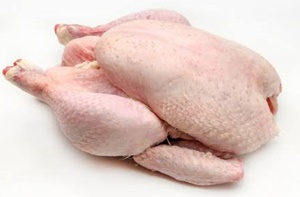
Key Information
Journal
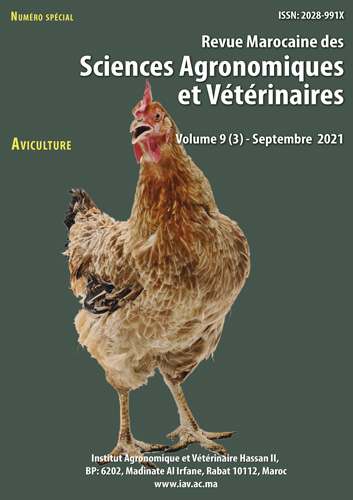
Published in Vol. 9 No. 3 (2021) of Moroccan Journal of Agricultural and Veterinary Sciences.
Multidisciplinary journal that publishes original research articles and literature reviews in the fields of agriculture, agronomy, rural engineering, topography, forestry, horticulture, food, nutrition, animal husbandry and veterinary science (online-ISSN: 2550-4401, print-ISSN: 2028-991X). Indexed by DOAJ, Google Scholar, Articles DOAJ, Mirabelle, ROAD, WorldCat
About the Journal
Abstract
The objective of this study was to assess the feasibility of extending the mandatory shelf life of whole refrigerated poultry carcasses as slaughtered and prepared in approved Moroccan poultry slaughterhouses. For this purpose, three assays were conducted under different cold storage protocols. For each trial, poultry carcasses were subjected to sensory and microbiological analyses. Sensory evaluation involved the appreciation of signs of spoilage (odor and appearance). Microbiological analyses involved counting of microflora indicating spoilage (total mesophilic aerobic flora and psychrotrophs) along with that indicating hygiene (faecal coliforms and enterococci). The counting of mesophiles and psychrotophs of refrigerated poultry carcasses revealed a quite high level of initial contamination, a steady microbial proliferation which accelerates during the fifth and sixth days post-slaughter. At the end of storage, psychrotrophs dominate. The high loads of faecal coliforms and enterococci were in agreement with a contamination that originates from poultry faecal matter. Nonetheless, these numbers should be pended in relation to the technique of sampling, which included the rinsing of the cloacae and abdomen. These preliminary results indicate that the mandatory shelf life of refrigerated poultry cannot be extended under the present conditions of slaughter, preparation and cooling. Means of extending the shelf life may include improving the current chilling procedures, a mapping of critical sites of contamination at the slaughter lines and an assessment of the actual efficiency of sanitation procedures with respect to the elimination of spoilage flora.
Keywords: poultry, carcasses, shelflife, poultry slaughterhouses, refrigeration, spoilage, sensory evaluation, microbial analyses, regulation
References
Details
License

Revue Marocaine des Sciences Agronomiques et Vétérinaires est mis à disposition selon les termes de la licence Creative Commons Attribution - Pas d’Utilisation Commerciale - Partage dans les Mêmes Conditions 4.0 International.
Fondé(e) sur une œuvre à www.agrimaroc.org.
Les autorisations au-delà du champ de cette licence peuvent être obtenues à www.agrimaroc.org.