Application of a lesion scoring system study the pathogenicity of low pathogenic avian influenza virus H9N2 in experimentally infected broilers
Authors
Yassmina BIDOUDAN, Saadia NASSIK, Oufae FASSI FIHRI, Enrico BOLLO, Mohammed EL HOUADFI, Noursaid TLIGUI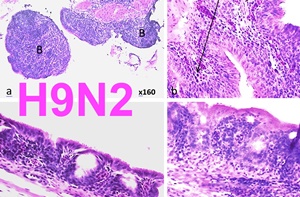
Key Information
Journal
Published in Vol. 9 No. 3 (2021) of Moroccan Journal of Agricultural and Veterinary Sciences.
Multidisciplinary journal that publishes original research articles and literature reviews in the fields of agriculture, agronomy, rural engineering, topography, forestry, horticulture, food, nutrition, animal husbandry and veterinary science (online-ISSN: 2550-4401, print-ISSN: 2028-991X). Indexed by DOAJ, Google Scholar, Articles DOAJ, Mirabelle, ROAD, WorldCat
About the Journal
Abstract
Following the introduction of the low pathogenic avian influenza virus H9N2 in Morocco in 2016, a study of the pathogenicity of the virus was carried out, to fully understand the pathophysiology of the disease and its role in the damage observed in the field. . The study was carried out under controlled conditions so that the true impact of the H9N2 virus alone could be demonstrated by limiting concomitant infections. To do this, 110 day-old broilers vaccinated to one day of age against the low pathogenic avian influenza virus H9N2 were reared and maintained in isolators. At 21 days, the chicks were divided into three batches, two batches (vC, nvC) were inoculated with the Moroccan strain of the H9N2 virus (GenBank accession number: LT 598532) and an uncontested control batch (vNC). The results of clinical examinations revealed only respiratory discomfort and no mortality. Two autopsies were scheduled for 5 and 12 days post-challenge. Lesionally, tracheitis, thickening of the air sacs, and pulmonary congestion were observed during the first autopsy, during the second, only the thickening of the air sacs persisted. The histopathological study carried out on the organs removed during the autopsies, revealed lymphohistiocytic tracheitis, severe bronchitis, mild lymphocytic nephritis and lymphocyte depletion in the spleen at 5 days post challenge, 12 days post-challenge , the lesions regressed and only a few cases of tracheitis were detected. The present study is the first to have investigated the pathogenic effect of the virus alone under controlled conditions, the results indicate that infection with the virus alone does not reproduce the disease as reported in the field and that of other factors (concomitant infections, breeding conditions and environmental stress, etc.) may be at the origin of the seriousness of the damage reported, the team also concluded that the Moroccan strain of the H9N2 AI virus has an essentially respiratory tropism and a weak nephropathogenic effect.
Keywords: Avian influenza, experimental infection, broiler chickens, H9N2, histopathology
References
Details
License

Revue Marocaine des Sciences Agronomiques et Vétérinaires est mis à disposition selon les termes de la licence Creative Commons Attribution - Pas d’Utilisation Commerciale - Partage dans les Mêmes Conditions 4.0 International.
Fondé(e) sur une œuvre à www.agrimaroc.org.
Les autorisations au-delà du champ de cette licence peuvent être obtenues à www.agrimaroc.org.