Salmonella spp: Between the zoonotic aspect and antimicrobial resistance, what is the challenge of the poultry sector?
Authors
Sabrine NACER, F. EL FTOUHY, S. NASSIK, M. LKHIDER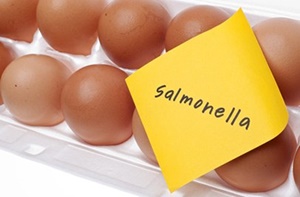
Key Information
Journal
Published in Vol. 9 No. 3 (2021) of Moroccan Journal of Agricultural and Veterinary Sciences.
Multidisciplinary journal that publishes original research articles and literature reviews in the fields of agriculture, agronomy, rural engineering, topography, forestry, horticulture, food, nutrition, animal husbandry and veterinary science (online-ISSN: 2550-4401, print-ISSN: 2028-991X). Indexed by DOAJ, Google Scholar, Articles DOAJ, Mirabelle, ROAD, WorldCat
About the Journal
Abstract
Salmonellosis remain one of the most common foodborne disease worldwide, particularly in developing countries and therefore a major etiology of human gastroenteritis. It manifests itself, depending on the host and the serotype, in the form of asymptomatic carriage, gastroenteritis or of severe systemic infection in most fragile people.For many years, Salmonella has been the major cause of infections of the human digestive tract, linked to the consumption of food of animal origin. Among these commodities, poultry meat products and particularly eggs are strongly incriminated and therefore are the main cause of the pandemic of non-typhoid human salmonellosis. Since the 1990s, Salmonella isolated in humans have been increasingly resistant to antibiotics with sometimes strains resistant to several latest generation antibiotics. Consequently, we deemed it useful that it is interesting to approach this topic through a literature review on the salmonellosis, the impact of antibiotic resistance on public health. Programmes to prevent the Salmonella antibiotic resistance are also reviewed.
Keywords: Salmonella, Poultry, Egg, TIAC, Antibiotic resistance
References
Details
License

Revue Marocaine des Sciences Agronomiques et Vétérinaires est mis à disposition selon les termes de la licence Creative Commons Attribution - Pas d’Utilisation Commerciale - Partage dans les Mêmes Conditions 4.0 International.
Fondé(e) sur une œuvre à www.agrimaroc.org.
Les autorisations au-delà du champ de cette licence peuvent être obtenues à www.agrimaroc.org.